
Poetry Anthology: It’s not symptomatic, it’s systemic
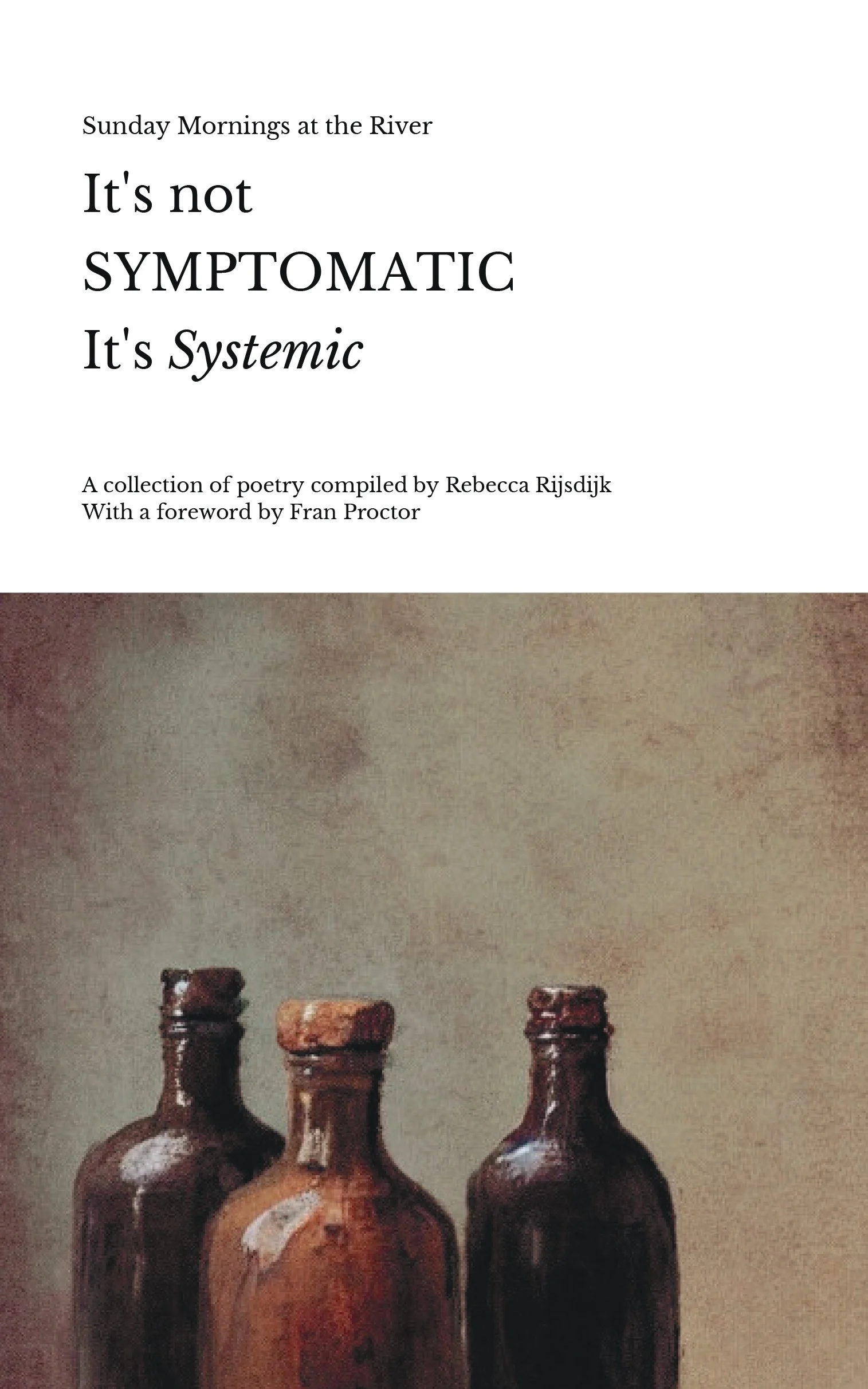
“Dive into “It’s Not Symptomatic. It’s Systemic,” a powerful anthology from Sunday Mornings at the River that unravels the intricate layers of trauma, resilience, and the systemic forces that shape our lives. This compelling collection features voices from around the globe, each contributing raw, unfiltered poetry that confronts personal and societal injustices. With a foreword by Fran Proctor, this anthology is more than just poetry—it’s a call to action, urging readers to recognize and dismantle the structures that perpetuate suffering.
These poems traverse the landscapes of identity, loss, and healing, offering readers a profound exploration of the human condition. Whether it’s through poignant reflections on personal trauma or a critical examination of societal norms, each piece in this collection invites readers to engage with the deeper truths of our shared existence. “It’s Not Symptomatic. It’s Systemic” is a testament to the strength of the human spirit and the power of words to inspire change.”
After the Launch on September 22, I’ve read the whole book and wrote a review
In this powerful anthology, “It’s Not SYMPTOMATIC, It’s Systemic,” 57 poets from around the world unite into a single object, a small book, by sharing pieces of their souls into 88 poems. Each one is a prism refracting multifaceted experiences.
The book becomes a gallery of human resilience. As readers, we become witnesses—each through our unique filters—to the stages of struggle and healing, as misery and paradise defy predefinitions and emerge from the raw material of our lives.
At the heart of these poems lies a universal theme: connection. Yet, paradoxically, the very thing that sustains us, often hurts us. In certain contexts or circumstances, building and navigating safe connections becomes a power game. We find ourselves in a labyrinth where trust and vulnerability should intersect, but hardly and not without tremendous and hardship effort, do.
Consider the quality of our connections—the invisible threads that bind us. They define our emotional landscapes. Sometimes, we stumble upon hellish depths and other times, we jump to celestial heights. The measure of our well-being rests upon these delicate bonds and finding harmony between them.
As a species, I believe we are only beginning to understand connections. We blindly reject negative ones, fearing their toxicity. Simultaneously, we embrace positive ones, even when they seem too good to be true. And so, the circle continues—a dance of dreams and nightmares.
While many poems in the book are good, I encourage you to read it yourself.
To give you a sneak peak, I’ve selected a list of my 20 favorites, each one representing a unique blend of literary merit and personal resonance—a balance that is inherently subjective.
For those eager to explore more, I highly recommend purchasing the printed or Kindle version. Let the poetry lead you to your own favorites. You’ll find my poem "Onion" on page 24, the 6th in the collection. A delightful coincidence, as I don’t recall mentioning that 6 is my lucky number!
So, dear reader, whether you are drawn to cosmic metaphors or the subtle whispers of forgotten voices, may these verses accompany you on your journey.
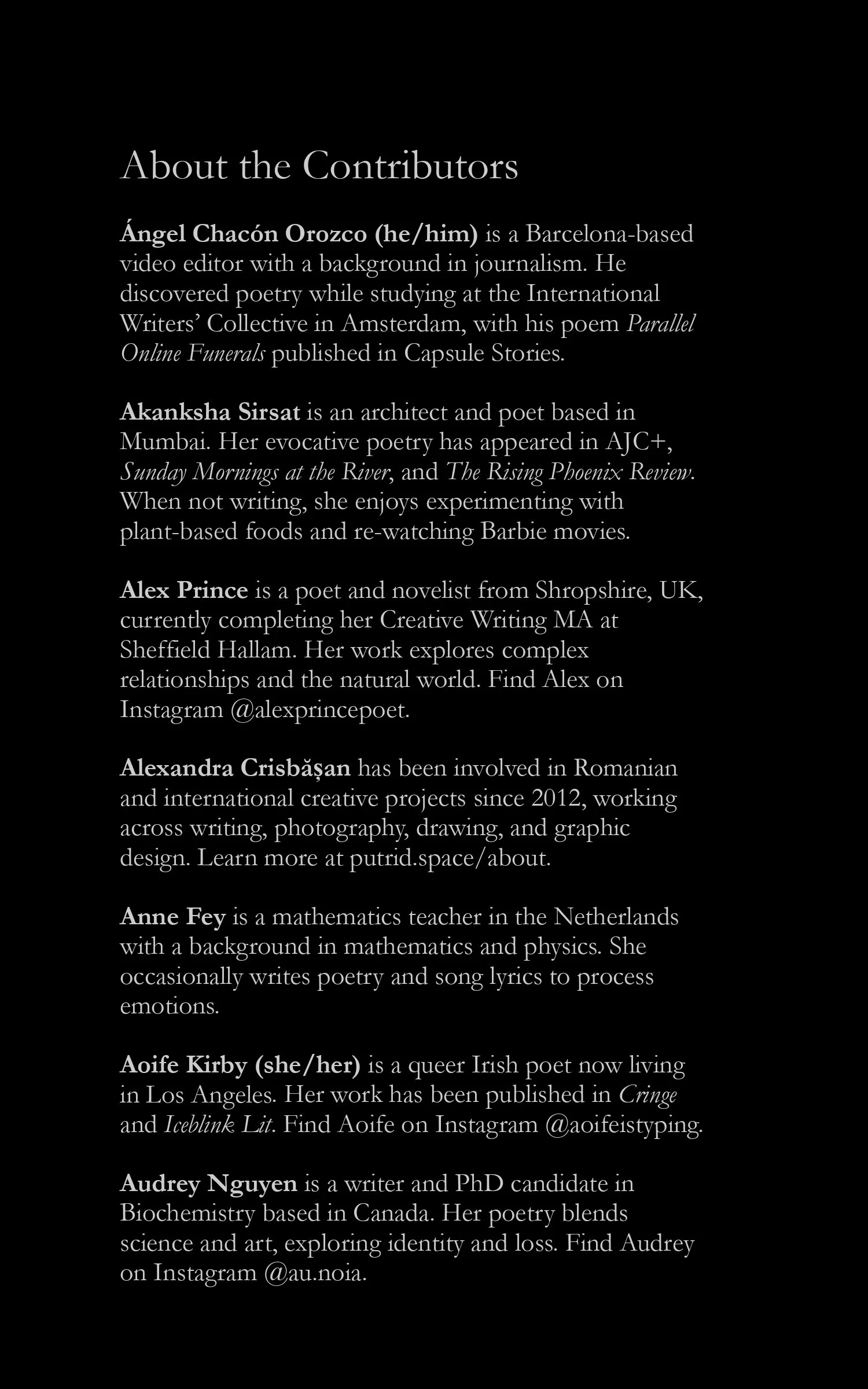
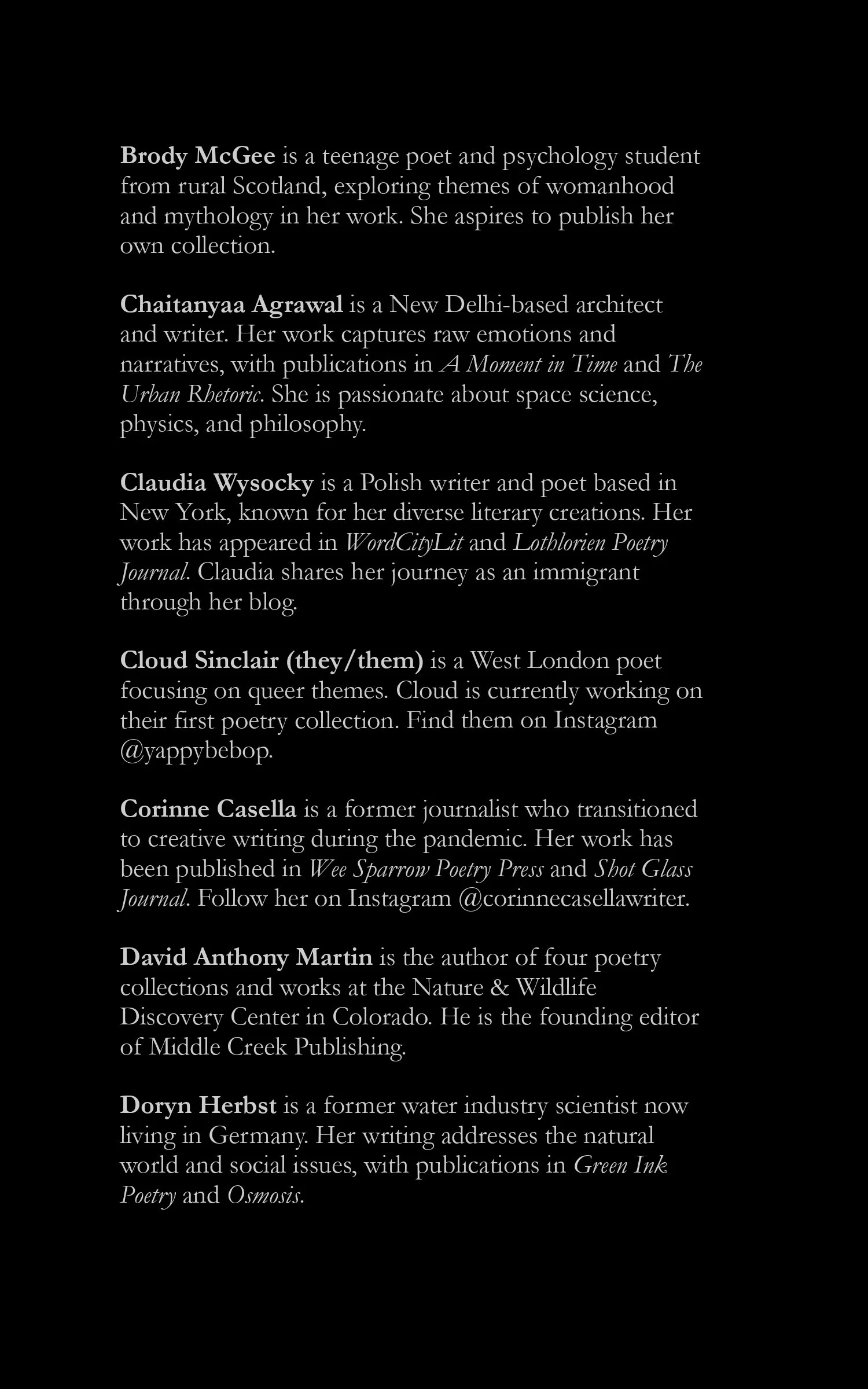
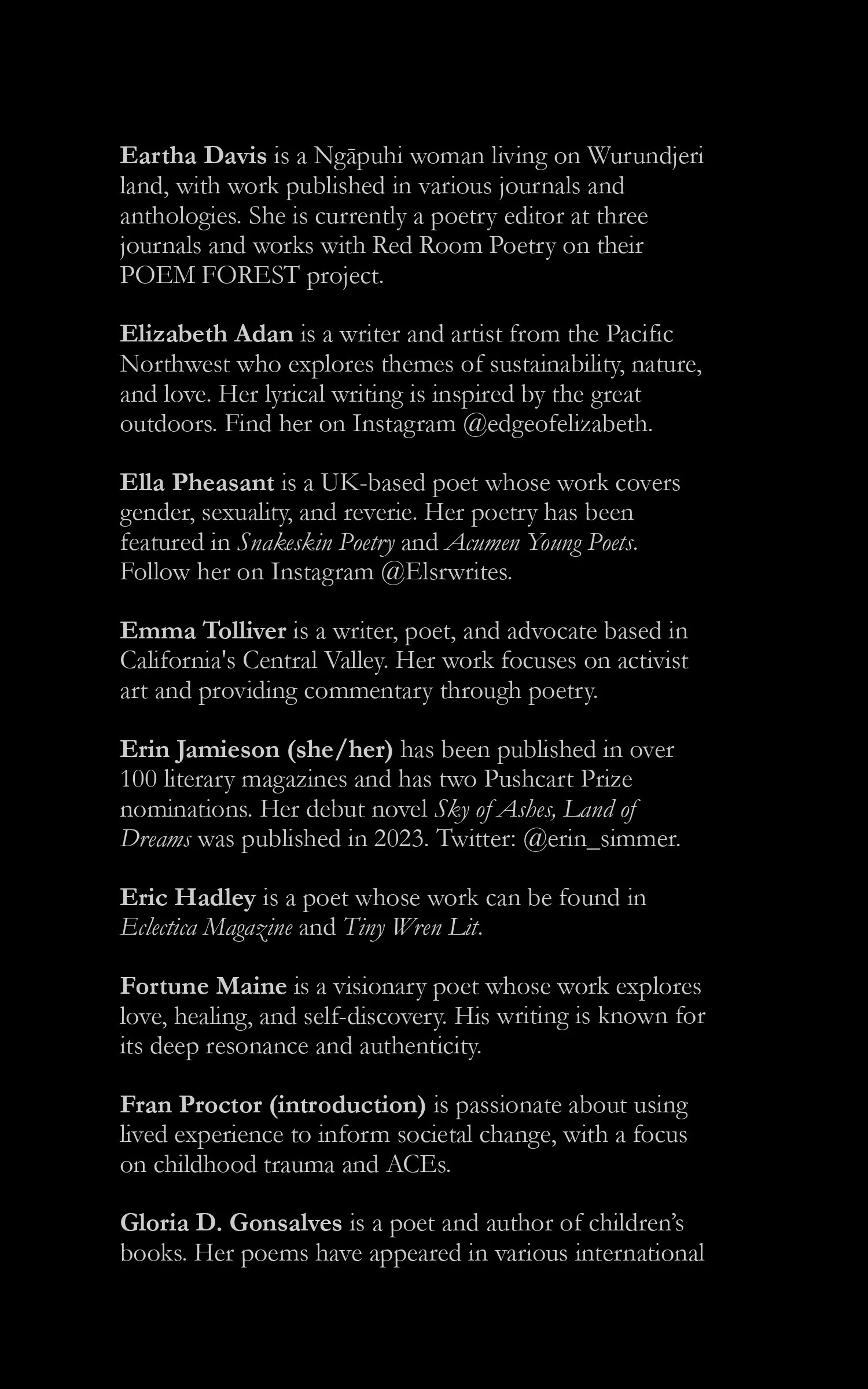
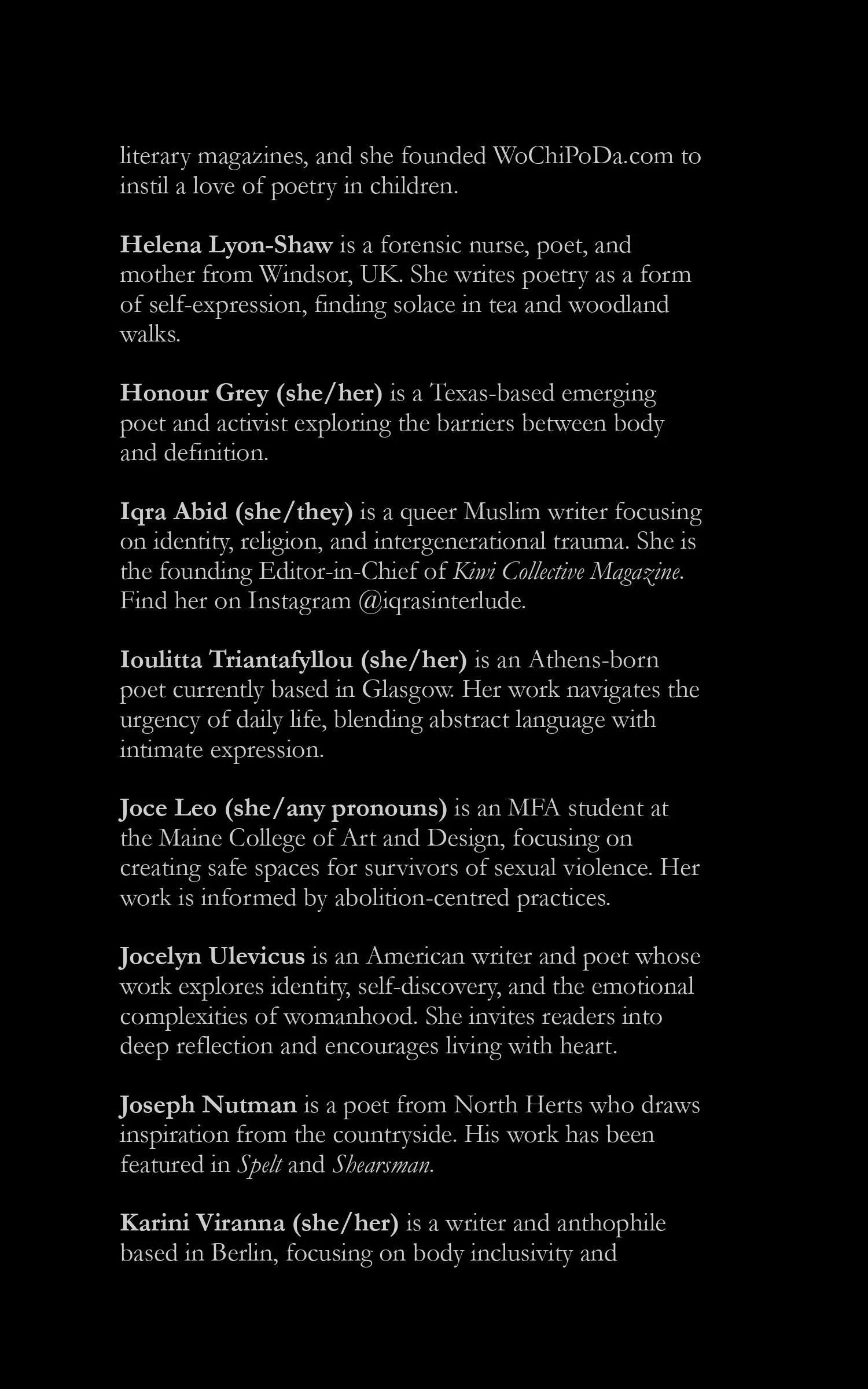
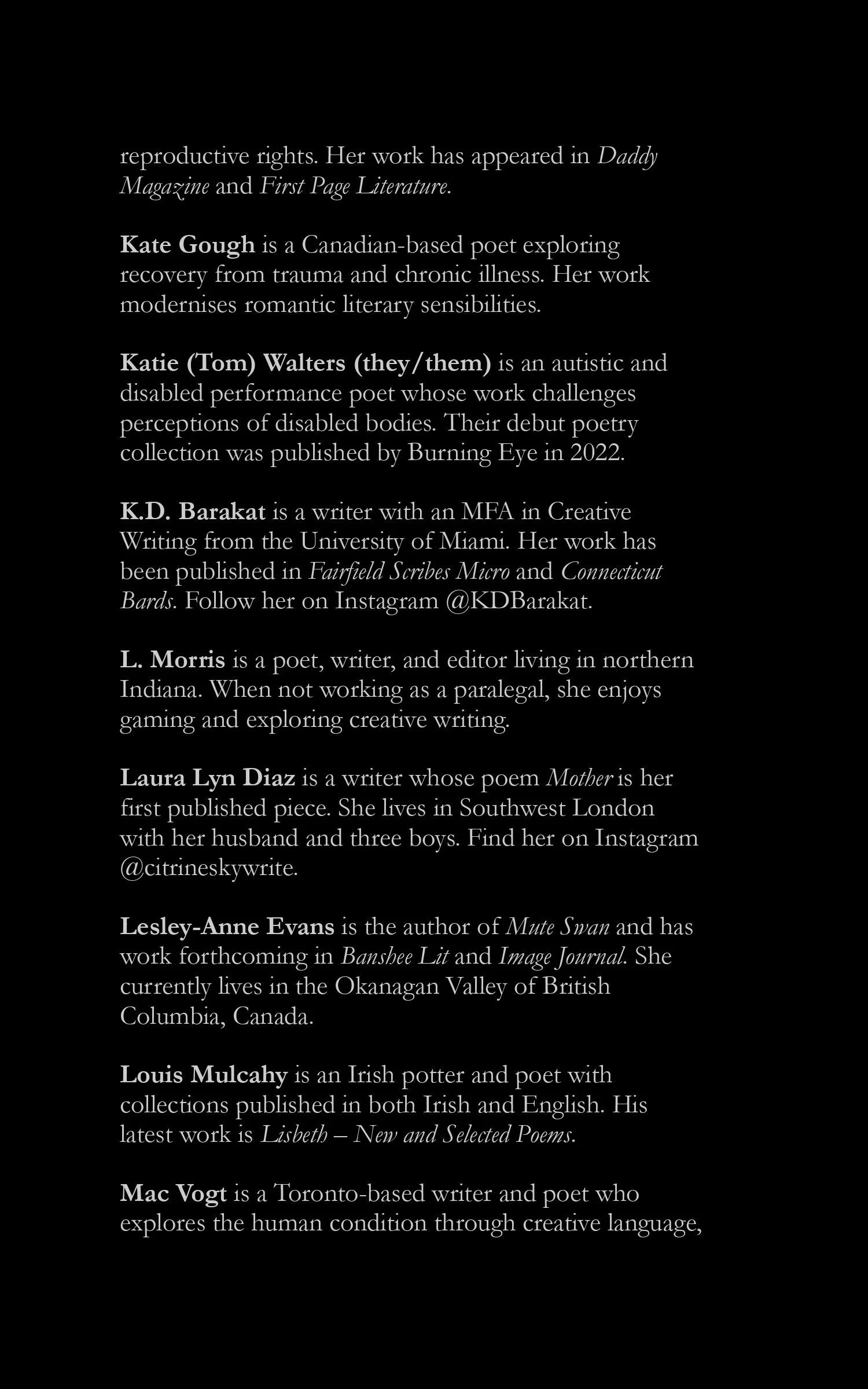
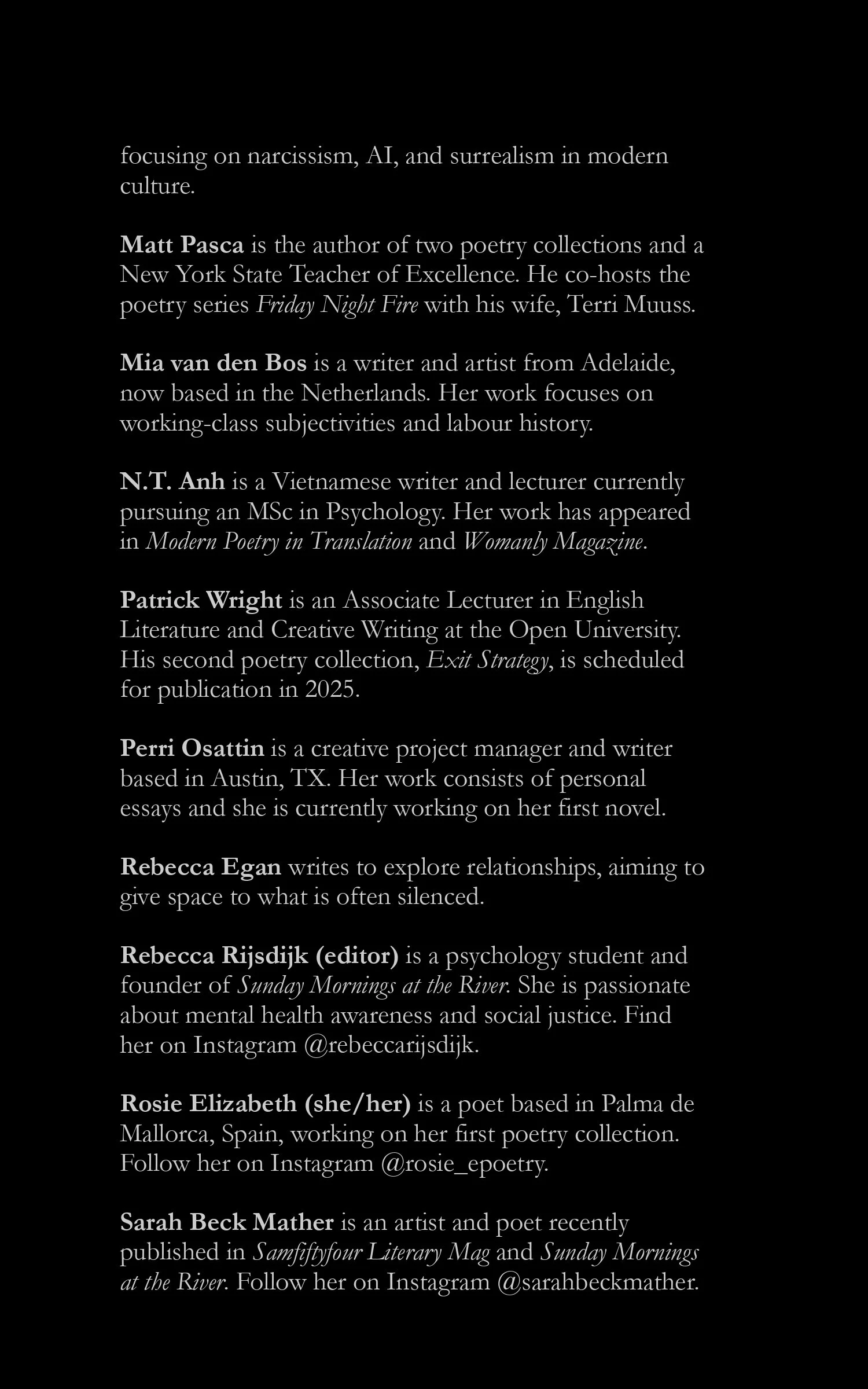
FAVORITE PARTS FROM POEMS AND BRIEF REVIEWS
-
"the pavement pulling forward like a rug
of black and blue love, cool, raw,
that for making us do this, this real thing,
this insane, insanely black thing should process
purposefully blacking out backstage,"REVIEW
Reminds me of V's Introduction speech from V for Vendetta -
"slap a pad onto your stab wounds
tampon in bullet holes
blush in the newest shade of bruise and
amuse again"REVIEW
Everyone who falsely claims to be a victim should read this poem and reflect on the impact of their lies. Each time a deception is uncovered, a genuine victim suffers by facing disbelief and being denied the help they need. -
"flashes illuminate actions
what moves us heralds a storm
a generation of brick walls
tomorrow is yesterday’s terrace
a chance to make space or get lost in the strangeness of hospital beds, nocturnal
voids,"REVIEW
To me, this poem feels like racing thoughts in confusing nights, when I'm on the brink of sleep. It's a time when nothing feels clearly right or wrong—just a swirl of contemplation about the worth of existence, between doubt, dread and wonder. -
"the strategy whispered at you
from childhood, ‘capture the king’;
you didn’t know it was a war,
that you’d be the one trapped."📜by Alex Prince
REVIEW
To me, this poem vividly illustrates the "trap" that marriage can represent for many people. The references to players and predetermined roles create a sense of inevitability, while the imagery of the white dress—made of paper—suggests a binding that offers little protection. It evokes memories of times when girls were frequently coerced into marriage across various cultures, highlighting how this union can still feel more like a cage than a celebration, today. -
"And my only sin is being alive.
They want to hand me flowers,
but they want to drop it on a tombstone."📜by Fortune Maine
This short poem encapsulates the essence of feeling like a pariah without explicitly stating it. Have you ever felt that, while you might grasp some aspects of the world, it still feels fundamentally incompatible with who you are? Even if you don’t desire the world to bend to your needs, it’s as if you’re a fish forced to fly, ultimately leading to your demise.
-
"mushrooms to your coffin,
you who waits
for the moon to gossip,
you who banters
with the cloud shapes,
you who dares
a hide-and-seek with the sun;you are in class now,
learning new skills
about man-made disasters.
The gurus of apathy
offer free lessons."REVIEW
Back when I was in school, it was, fortunately, before the era of online classes.What I love about this poem is how it captures my feelings during that time perfectly.
The Education System in many parts of the world is in great need of "renovation"
-
"But when I begged
for help
the help just took a scalpel to
the centre of the wound."📜by Rebecca Egan
REVIEW
The same holds true for this poem, too. Both "High Maintenance" and "Restraint" will be challenging reads for those accustomed to rainbows and sunshine. This difficulty can be particularly triggering for vulnerable individuals as well, which shows in this case, the depth and quality of the writing. The chaotic structure and bold wording enhance the stark, unyielding images they evoke, leaving a powerful impact that lingers and makes you think about human nature. -
"& You twisted
my joints
to sculpt a shape stronger
that could carry my body, a noise
in my voice that could eclipse"REVIEW
Is another raw poem, but this one beautifully blends the rawness of experience with existentialism and more abstract themes.This poem blends the rawness of experience with existentialist themes. It invites readers to confront the complexities of life through a violent lens, presenting this aspect as just as integral to existence as any other, yet often left in the shadows.
-
"How had she found such kindness
in a decrepit home of filth
where no life could thrive inside of it
every flower left to wilt
A match was struck, ignited
gasoline stains upon the floor
down came the home we never had
left in ash and dust once more"📜by Aoife Kirby
REVIEW
This dark poem explores the themes of courage and the possibility of starting anew. It delves into the depths of madness and abuse while showing how kindness and healthy connections can save lives. Though it carries sadness, it serves as a powerful reminder of our extraordinary capacity to overcome and reinvent ourselves. An extraordinary capacity we often use as a last resort. Before that point, many of us find ourselves paralyzed by fear or habit which delays the ultimate change of our circumstances. This poem is an inspiration for anyone who questions whether they have the power to reclaim their life and shape their own destiny. -
"I am a seed planted by those who came before me:
my great-grandmother the teacher,
my grandmother the messenger,
my mother the survivor,
me the writer."📜 by Iqra Abid
A beautiful exploration of our "immortality."
If humans were more aware of the messages they send to future generations from their work ethics, love languages and all the ways they express themselves, the way they choose to live, we wouldn’t feel the need to hope for true immortality.
While this poem primarily addresses intergenerational trauma, it also highlights our amazing capacity to “give” on a larger scale. We do share and contribute, but often without awareness, which prevents us from thoughtfully choosing what we pass on.
My perspective is this: if the roots of intergenerational trauma can grow so deep, imagine how deep the roots of kindness, humility, love, resilience and respect could reach if only we made a conscious effort.
-
"My resilience knows no bounds, slashed in half, while
doubling up.
Depleted while being depended upon.
Needing to get up and keep moving on.
No idea of the duration.
Seeking some kind of salvation.
While never knowing how long my hurt will last
As this helpless present is becoming our past.
Perhaps it won’t end, will always have some kind of sway
As this new reality can never now, go away."(...)
"Never before did I really know what it meant to be so
broken, while so put back together.
I'm stitching myself at the seams.
Needing to needle, pained as the thread that I wanted to
need, weaves me back into some kind of form.
I'm bent out of shape while I still have to perform.
Perhaps bent out of shape is the look of my new, never asked
for norm."📜 by Amey Minsansa
REVIEW
This poem is for anyone who navigated difficult times while trying to maintain a sense of normalcy. There's a saying in Romanian: "Când simți că nu mai poți, mai bagă," which translates to “When you feel like you can’t go on anymore, push a little harder.” I believe this resonates with many of us. When we first encounter that feeling of "I can't take this anymore" it often marks just the beginning of a challenging journey. It suggests that we may face several more moments of "I can't take this anymore" before we break through. -
"I dove deep in the shadowed waters,
slipped through waves of seeping navy ink,
grasping at greying, grizzled chastity,
scraped my flesh upon sullen rocks
and watched the crimson bloom.
I want to be your mystery, your unpublished,
unopened can of floozy worms.
Your seaweed fingers, they are welcome,
squeezing my neck, supplying
a rose-tinted noose, poppy-coated pills."REVIEW
This poem captures dirty-reckless spirited charm of "live young, die fast." It bewitches you with a rush of dopamine, oxytocin and adrenaline, drawing you in until this coping mechanism falters, exposing a reality where thrill becomes danger. -
"Unnecessary suffering
is the diagnosis they give you
as you writhe red on the linoleum floor.
This new drug they give you smokes up the fog,
you can’t remember if or when you choked aloud last."📜by Kate Gough
REVIEW
Not many countries offer a decent mental health system or compassionate doctors and nurses. Some conditions are incredibly challenging to manage, requiring exceptional individuals who can provide genuine support to patients. This poem captures the profound pain that can accompany illness, revealing how much additional suffering can arise when proper care is lacking. -
"warming up my core
I'll fret over the fragments
sinking to the bottom of the cup,
dissecting them for answers,
tearing their fragile skin from branches
until dust rises to the top
He'll bend, kiss my temple,
smudge my glasses
out of focus, out of sorts"📜by Aoife Kirby
REVIEW
I appreciate the vagueness and intimacy of this poem. Its open-ended nature allows for multiple interpretations, but one element that resonates across all of them is the sense of nostalgia—perhaps tinged with grief—paired with a confusing softness and gentleness. The author references "a lack of calm before the storm," yet I can’t help but wonder if this poem itself embodies that very calm, often overlooked due to the instinct of fight or flight. -
"So,
I crawl into my frontal lobe
and crack
Smash my skull into smithereens
with eyes open wideAnything else?"
📜by Helena Lyon-Shaw
REVIEW
Combining seeds of: the absurd, physics, religion, humanity, miracles and the unknown, this evokes the sensation of the weight of the world crashing down on you. Crushing yet expanding, dissolving you into a state of freedom.But perhaps that is only a miracle or the aftermath of chaos striving for order, as if order itself could ever truly exist.
-
"There is a skin beneath my skin and it is aching
to break free. I don't know where the night starts
and I end."REVIEW
A testament to endurance. If your body has ever endured pain so profound that time and reality felt like they were simply “passing you by,” then this poem is for you. -
"I take nothing.
A black eye and broken ribs in the name of good sex,
primed with corner girl’s slick,
Vanilla is for cupcakes, she says."REVIEW
At first glance, you may not recognize the beauty in these verses. That's because they come without pretense. They resemble makeup smeared across your face with dubious substances—unrefined, unpolished. Not delicately applied or romantically enhanced. Like a punch in the face, followed by a kiss, revealing a beauty not in their rawness, but in their unapologetic honesty. "I am what I am." -
"Jesus, are you tired of turning water to wine
so that he will love you?
Are you tired of healing men born blind
so that he will love you?
Are you tired of splitting fish and loaves,
working yourself to bones
nailed to a cross,
the original people pleaser, did you do all this
just to be believed in?"(...)
"Jesus, are you sure you aren’t god’s daughter?"
📜by Sofiya Ivanova
REVIEW
I genuinely can’t tell if this poem is meant to be humorous or not (I suspect it is?), but that’s exactly what I love about it! As a nonbeliever, I’m drawn to the analogy of Jesus and the daugher symbol. It reminds me of when boys tease each other for being outdone by girls. It’s not that it truly matters; rather, it’s amusing to see those who uphold certain standards getting played at their own game. In this context, if Jesus is portrayed as "weak" like a woman, perhaps he should recognize that the old ways are not only flawed, but also outdated. -
"By Monday, we are skipping classes
borrowed liquor, stolen glances
Nirvana, blaring through the speakers,
your lips taste like lemonade"📜by Aoife Kirby
REVIEW
If you weren't exactly the model student in school, this poem is for you—a nostalgic reflection on those rebellious teenage days. -
"And is better for it
In the new world we are creating,
There will be no more cages
No one will be illegal
For this land was never ours to own
In the new world we are creating,
We will love each other
Even when we have hurt each other
We will look around and know
There is still humanity in each of us"📜by Tea Brown
REVIEW
I’m choosing this not because I believe such a world could ever truly exist (at least not in my lifetime). This poem captures a simple drive. The drive to try shape it in a way that causes no harm. Perhaps, by doing so, I can change my own world. When I’m gone, what I leave behind may inspire others to change theirs. Maybe in a thousand years, we still won’t have the world each of us dreams of (and we shouldn't get all that we dream of either), but we might create more spaces where we can connect, even if just for a few hours, days, or months. That possibility of a shared experience that embodies an "ideal" world, would be far better than nothing at all.
about the publisher
“Sunday Mornings at the River is an indie poetry press run by a poet. It’s aim is to provide a home for poets outside the traditional publishing world.”
-
Sunday Mornings at the River, founded by Rebecca Rijsdijk in 2012, stands as an indie poetry press with a mission to nurture a robust literary community where poets can truly thrive. Inspired by Salman Rushdie’s belief that the role of poetry is to "name the unnamable, to point at frauds, to take sides, start arguments, shape the world and stop it from going to sleep," as quoted from The Satanic Verses, the press is committed to publishing poetry that resonates with this ethos and seeks to make a positive impact on the world.
Rebecca, hailing from a working-class family and serving as the editor-in-chief, deeply understands the importance of lifting the voices of marginalized groups, including women and individuals with chronic illnesses. At Sunday Mornings at the River, the emphasis on equality and inclusivity is paramount. The press positions itself as a counterbalance to the traditional publishing industry's gatekeeping, aiming to offer a platform where those often sidelined by conventional outlets can have their voices heard and appreciated.
For those interested in delving deeper into the philosophy and operational dynamics of Sunday Mornings at the River, Rebecca Rijsdijk has shared insights in a blog article dedicated to community transparency, reflecting the press's open and inclusive approach.